Let’s Keep the Food in Food Aid

In this week’s Focus on Agriculture column, American Farm Bureau Federation President Bob Stallman discussed U.S. international food aid and the recent criticism Farm Bureau received after a pieced-together quote from an AFBF staff member was published on the topic.

“Facts do suffer when skewed through the prism of agenda-driven politics,” Stallman said recalling Farm Bureau’s involvement in the Food for Peace program, tracing its origin back to a Cheyenne County (Kansas) Farm Bureau meeting in 1953. “If critics of Farm Bureau’s policy on fu.s. aidood aid ask whether we are proud of our role in this program, the answer is an unequivocal, ‘You bet we are,’” he added.

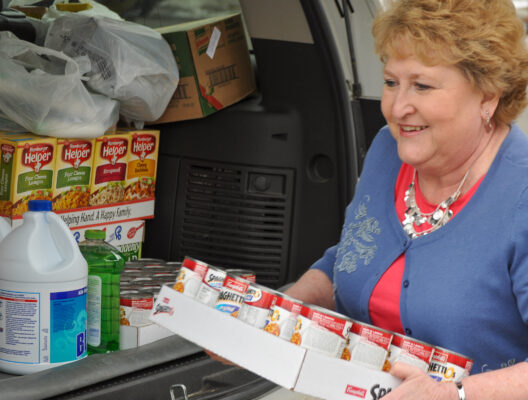
The column addresses how switching from food to monetary donations can be problematic because cash can go towards so many alternative things. Food donations ensure people worldwide are being fed while showing the use of taxpayer-funded international food assistance is making an impact.

America’s food aid program has been going strong for over half of a century in part because of our country’s farm and ranch families’ ability to supply an abundance of food. “Our current approach to helping feed the world successfully ensures that we share our nation’s bounty,” said Stallman.

Forward in the Digital Age

On May 3, the last print edition of FBNews was printed and shipped. The paper, which covers a gamut of agricultural affairs, resumes as a free e-newsletter and website, http://fbnews.fb.org/. Stewart Truelsen explained in this week’s Focus on Agriculture column that, “The newspaper is not a victim of the Digital Age as much as it is a beneficiary of it.”

FBNews has followed the American Farm Bureau Federation as it, and agriculture, has evolved over the course of nearly a century. The publication began in a time when farming was done with horses or mules and many farmers and their families did not know the perks of electricity in their rural homes yet.

NEWSNot everyone was as delighted about a publication that rallied farmers and ranchers in grassroots efforts. Congress had their objections and preferred their voting records “off the record” when it came to FBNews, but the newsletter has included them up to this very day.

With the transformation from print to electronic, FBNews will now produce more up-to-the-minute agriculture-related news while providing members and non-members alike a platform to share information with friends, colleges, local officials and Congress.

Specialty Crops and the Farm Bill

Corn 5In a recent Focus on Agriculture column, Barry Bushue, vice president of the American Farm Bureau Federation, said it is important to not only have a “robust array of crops” produced diversely, but it is also important to have a farm bill “which helps farmers and ranchers deal with risks that threaten their ability to produce the food, fiber and fuel we all need.”

Congress has taken a recent interest in “specialty crops,” which accounts for approximately 17 percent of the $391 billion in agriculture cash receipts last year. And starting with the next farm bill, Bushue said Farm Bureau’s proposed new specialty crop insurance programtomatoes 2 – the Stacked Income Protection Plan – would cover apples, tomatoes, potatoes, grapes and sweet corn. (STAX would also cover the so-called program crops grown by farmers, including field corn for livestock, soybeans, wheat, rice, etc.)

STAX was created to give farmers a fiscally responsible and effective safety net administered by the Agriculture’s Department’s Risk Management Agency. The crops selected by Farm Bureau for STAX coverage ranked in the top 13 in value of production in the U.S., represent at least 2 percent of the nation’s value of production and are produced in at least 13 states.